A Visit to Henderson’s Line-Up: Wild Blue Wanderers Put Their Super C to the Test

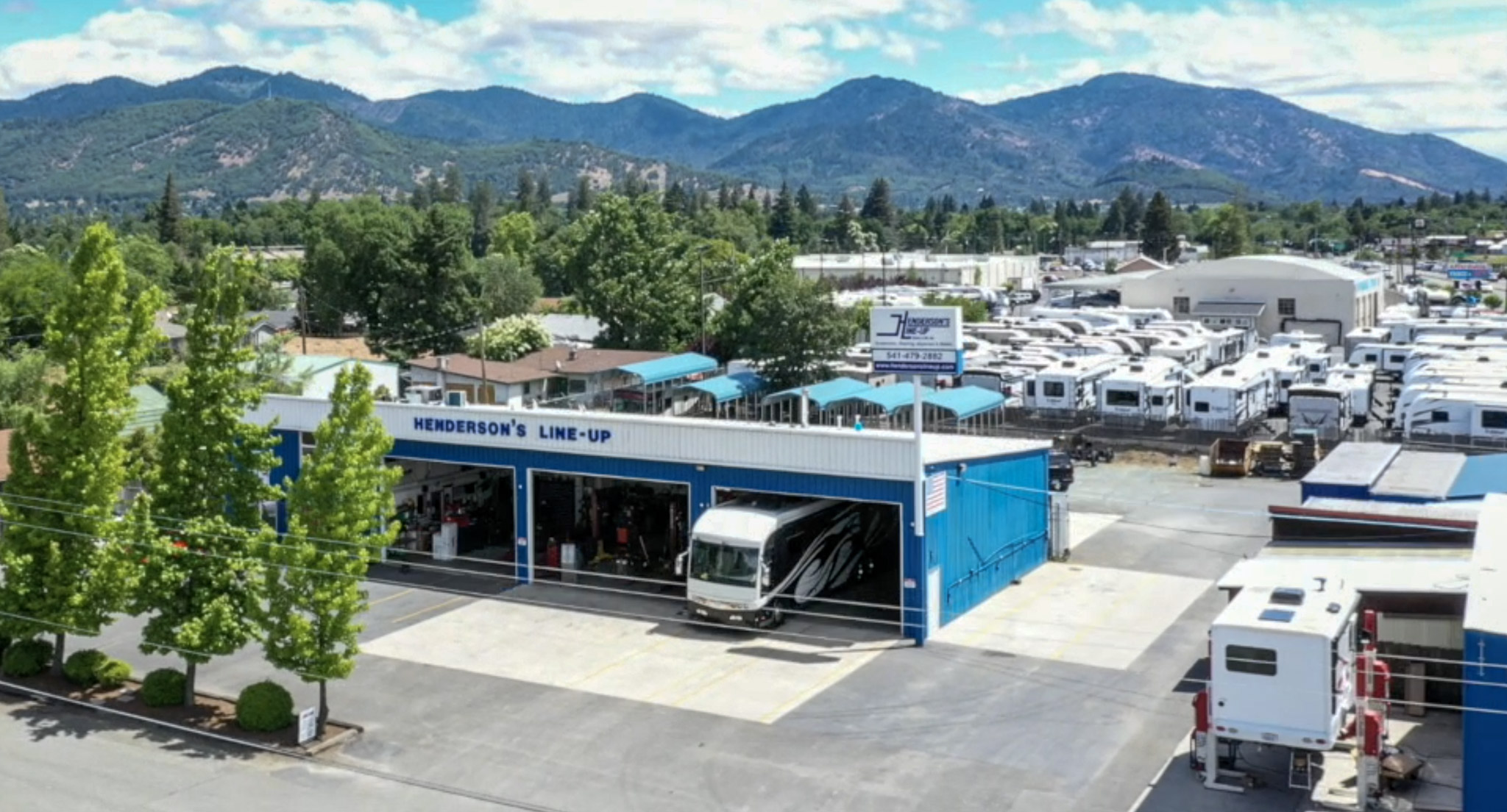
Sometimes you get so used to the way your motorhome drives that you don’t realize there may be room for improvement. That’s exactly what Scott at Wild Blue Wanderers discovered when they brought their Super C to Henderson’s Line-Up in Grants Pass, Oregon. They didn’t arrive thinking their motorhome drove badly. In fact, they were already pretty happy with it. But they wanted to have the coach inspected and get another perspective on its steering, suspension, and overall handling. What followed was a great example of why having someone evaluate how a motorhome actually performs on the road can uncover things that aren’t always obvious from the driver’s seat.
Starting With How the Motorhome Actually Drives
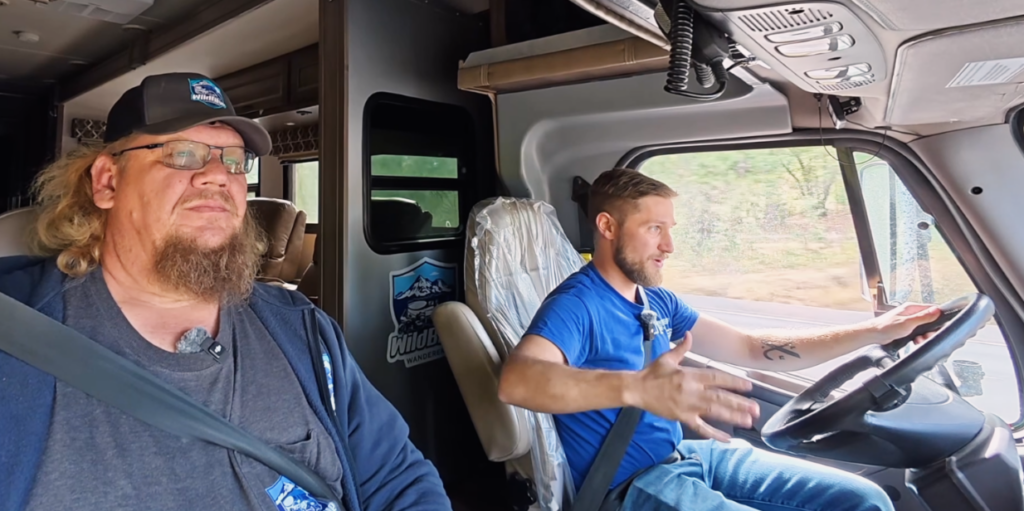
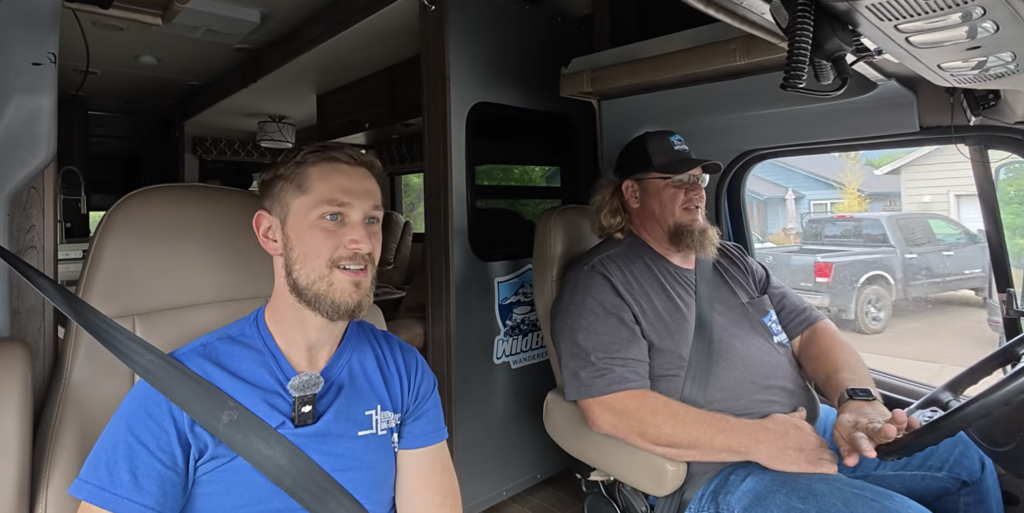
    The visit began with our ultimate Road Performance Assessment test. Rather than immediately putting the motorhome in the shop and looking underneath it, Tommy took it out on the road to see how it behaved in real world driving conditions. The route included highway driving as well as back roads so he could evaluate the coach in several different road conditions. During the drive, he paid attention to things like steering returnability, whether the coach wanted to pull in one direction, body roll, sway, how it reacted during lane changes, and how much it bounced or continued moving after hitting uneven sections of road. One of the first things that stood out was how the coach swayed. During lane-change testing, the coach had noticeable body roll along with some movement back in the opposite direction after the initial sway. Tommy described the front of the coach as doing a fairly good job of holding things together while the rear suspension felt softer in terms of controlling sway. There was also some up-and-down movement, or what we often call porpoising. It wasn’t described as severe, but it was enough to show there was some room for improvement. What made the conversation particularly interesting was Scott’s perspective. He explained that when you drive the same rig all the time, you get used to how it behaves. Scott’s Super C didn’t feel bad to him, especially compared with other large vehicles he has driven in his lifetime including semi-trucks. Having someone who regularly drives and services different motorhomes evaluate his coach gave him another point of view on what could potentially be improved.
Looking Underneath the Coach
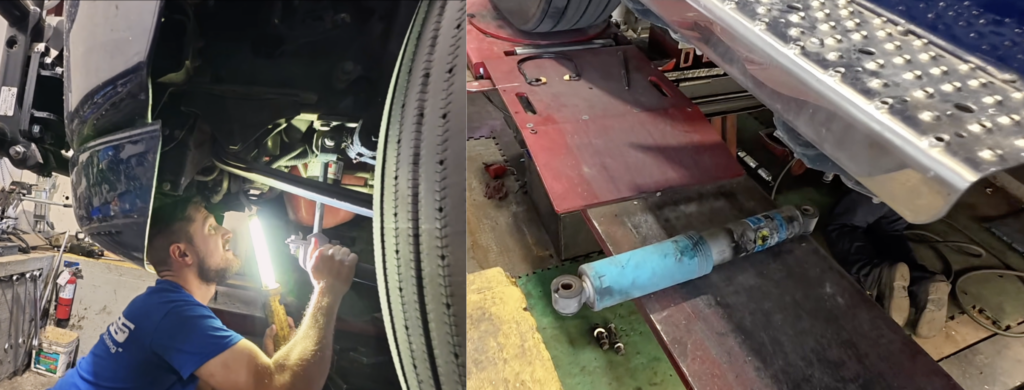
    The road test was only the first part of the full RPA process. Once back at Henderson’s Line-Up, the inspection continued underneath the motorhome. Several components looked good. The tie rod ends and drag link checked out, as did the bearings, springs, kingpins, spring bushings, rear suspension, body mount welds, and other components that were inspected. The front sway bar was also working. One component, however, clearly needed attention: the left front shock was leaking and was determined to be blown. The rear shocks weren’t showing notable leakage, but they were still the original shocks, and the coach had approximately 73,000 miles on it. Based on the road test and inspection, shocks became the first improvement the owner decided to address. That’s an important part of this particular visit. The inspection didn’t result in a recommendation to replace or upgrade everything underneath the coach. There were other possible improvements discussed, including steering control and additional sway control, but the owner chose to start with the shocks and see what difference that made before deciding what else he wanted to do.
Deciding to Replace the Shocks
    After discussing the findings, the Wild Blue Wanderers decided to replace all four shocks with the KONI EVO FSD 9905-1036 and 9905-1038. Part of that decision was straightforward—the front shock was already blown. But the road test had also revealed the repeated movement and rebound that the shocks could help control. During the drive, Tommy explained that shocks and sway bars don’t do exactly the same job. A shock absorber pushes back in relation to how quickly it is being compressed or extended and acts like a timing device. While a sway bar acts like a spring and resists how far the coach leans. In this coach, better shock damping could help settle some of the back-and-forth cycling and floating feeling they were experiencing. The discussion also touched on expectations. It’s easy to hear an RV upgrade described as making a motorhome “ride like a Cadillac,” but Tommy was careful not to make that promise. Ride quality is subjective. The goal with these shocks was more specific: better damping, less unnecessary movement, and a calmer feel from the suspension. With that in mind, Scott chose to have the front and rear shocks installed.
Could They Feel a Difference After the New Shocks?
    They could. The next step in our Road Performance Assessment is to take the coach out on the final drive along the same route driven before the upgrades. As they got back onto the same roads used during the initial evaluation, the change became easier to identify. Even at slower speeds during the second test drive, the coach felt different. The motorhome could still sway, but it wasn’t continuing into the same excessive back-and-forth movement afterward. Tommy pointed out that this helped demonstrate the difference between what the shocks were controlling and what additional sway-bar improvements could potentially address. The slow body roll was still present, but the rebound and repeated movement had settled down. For this particular coach, that made replacing the shocks a logical first step. The front sway bar was functioning, one front shock was already blown, and the owner could feel an improvement after the new shocks were installed. He didn’t immediately decide to make every other possible upgrade. Instead, the plan was to drive the motorhome with the new setup for a while and decide later whether he wanted to address other areas.
The Real Test Came After Leaving Henderson’s
    One of the most valuable parts of the Wild Blue Wanderers’ experience came after they left our shop. The owner had about a two-and-a-half-hour drive back after his visit to Henderson’s Line-Up, giving him more time behind the wheel than a short test drive could provide. After making that trip, he said he could tell the new shocks had made a difference. He specifically noticed a reduction in the back-and-forth sway rebound. He also said some bridge abutments didn’t feel as harsh and that there wasn’t as much extra bouncing afterward. What makes that feedback especially useful is that he started the day believing his motorhome already drove pretty well. It wasn’t a case of bringing in a coach that he considered terrible to drive. It was about having someone evaluate what it was doing, identifying areas that could be improved, addressing one of them, and then seeing whether he noticed the difference himself. 
    This visit also gives a good look at the thinking behind our Road Performance Assessment for motorhomes. A motorhome handling problem isn’t always something you can fully understand by looking at the coach while it’s sitting in the shop. How does the steering feel on the road? Does the coach return to center? How does it react to a lane change? Is there excessive sway or rebound? Does it bounce repeatedly after a change in the road surface? Those are the kinds of things that can become much clearer when the motorhome is actually being driven. The main point of our Road Performance Assessment test is to make the invisible visible. From there, the physical inspection can add another piece of the picture. In the Wild Blue Wanderers’ case, the combination of the road test and inspection helped identify a blown shock while also confirming that several other steering and suspension components were in good condition. The result wasn’t a list of upgrades that all had to be completed at once. It gave the owner information he could use to decide what mattered most to him and where he wanted to start.
A Big Thank You to Wild Blue Wanderers
    We want to thank Wild Blue Wanderers for bringing their Super C to Henderson’s Line-Up and for sharing their experience. It’s one thing for us to talk about what happens during an inspection or how a suspension change can affect a motorhome. It’s another to hear from an owner who went through the process, drove the coach afterward, and was able to describe what he noticed for himself. After his trip back from Henderson’s, he said he was impressed by the improvements and grateful that the team had gone through the system and checked everything out. For now, he’s going to spend some time driving the motorhome with the new shocks before deciding whether to make additional changes down the road. And we think that’s a pretty good way to approach it.
Is Your Motorhome Not Driving Quite the Way You Want?
    If you’re dealing with motorhome sway, steering problems, excessive bouncing, poor handling, or another drivability concern, Henderson’s Line-Up can take a closer look at what your coach is doing. Sometimes you already know there’s a problem. Other times, like the Wild Blue Wanderers found, you may simply be curious whether the motorhome you’re already comfortable driving could be improved. To learn more or talk with our team, visit HendersonsLineUp.com or call (541) 479-2882. If you aren’t able to bring your motorhome to our shop in Grants Pass, Oregon, SuperSteer Parts is the parts side of our business. Visit SuperSteerParts.com or call (888) 898-3281. Thank you for reading this blog and until next time we wish you safer and happier driving.